Download PDF (1.4Mb)
View a map
Trin Warren Tam-Boore (bellbird waterhole), a productive urban wetland
Trin Warren Tam-boore is a created wetland in the north western ‘corner’ of Royal Park designed to treat and recycle stormwater run-off from the roads, rooftops and gutters of
surrounding suburbs.
 Constructed in 2005, this unique wetland consists of two linked ponds. The ‘treatment pond’ acts as a natural filter, with banks densely covered by native Australian plants that treat and clean stormwater through natural biological processes. The processed clean water then goes to the ‘storage pond’ and is used to irrigate extensive areas of Royal Park in summer, while the remainder flows through to Port Phillip Bay.
Home to a wide range of plants and animals, this inviting habitat is just a few minutes from the heart of the city.
A wetland with a purpose
Take a self guided walk and learn more about the features of this urban wetland at your own pace. Look out for the information signs at each point which describe the history and functions, the plants and wildlife of this area. The walk takes approximately one hour if you follow the suggested trail.
1. Welcome to Trin Warren Tam-Boore
Your journey starts at the orientation map at the main entry, which will guide you to the treatment pond and the boardwalk bridge across the water.
2. Cleaner water by design
Walk across the path and you can hear the sound of running water near the big rocks on the water’s edge. This comes from the outlet, which is the deepest part of this pond and the place where water overflows to the storage pond.
3. Purifying plants
 The elongated ‘S’ shape of this pond and its varying depths ensure that water entering the inlet moves slowly on a long pathway to the overflow outlet, receiving the maximum possible exposure to the cleansing effects of plants and sunlight.
In depths of less than 0.5m the plants, the microorganisms living on their stems and the sediments in which they grow, all treat the stormwater by absorbing or converting nitrogen and other nutrients.
4. Boardwalk series
Wetlands host complex eco-systems by providing food, water, shelter and breeding grounds for a wide range of animal species.
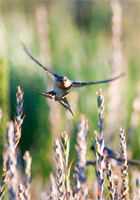
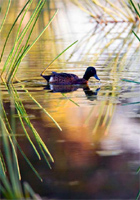
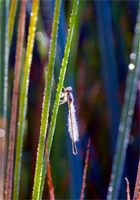
From the boardwalk, a variety of water birds and insect life can be seen in and around the water and on the habitat islands.

5. A bird’s eye view
There are about 800 different bird species in Australia, approximately 450 of them in Victoria. Bird watchers at a number of wetlands near Melbourne have recorded up to 270 different species over a year of careful observations. Screened by the timber Bird Hide, park visitors are able to observe birds in action – and to identify some of the more frequent visitors on the images displayed on the sign.
6. White’s skink
Now take a short walk to the hilly area beside the wetland. This area has been established as a protected habitat for a species now rarely seen close to the city, where the lizards shelter under the logs, rocks and rubble. (Access to this area includes a set of steps)
Recycled water for parks and trees
7. Cleaner water moving on
 A visit to the storage pond requires crossing Oak Street as treated water flows west through underground pipes into this holding pond. The reclaimed water then passes from the storage pond through a disinfection process and is used for parkland irrigation as Class A water (suitable for human contact but not drinking).
Using recycled water on grass areas during summer has dramatically reduced the consumption of drinking quality water used in this park. This scheme works so successfully that abundant quantities of Class A water have been delivered; in its first productive summer the reclaimed water maintained valuable street trees and 15 hectares of public open space, including the Royal Park Public Golf
Course and nearby sports fields.
The wetland has continued to produce beyond initial expectations to the extent that storage capacity has been increased with the installation of an underground, six million litre storage facility and two extra distribution tanks.
As Melbourne’s drought persists, Trin Warren Tam-boore continues to demonstrate the value of this far sighted initiative of the Victorian State Government and Melbourne Water.
How can you help?
If you walk a dog in Royal Park, please observe the ‘dogs prohibited’ restriction around the wetlands and any other ponds - and only release your dog from the leash in the designated off leash areas.
Keep in mind that all water is precious – and remember that you can reduce stormwater pollution by keeping litter, chemicals, dog waste and other pollutants out of the drainage system.
How to get there
Cycle: Take the Capital City Trail
Train: Alight from Royal Park Train Station
Tram: Take tram 55 and alight at stop 25
Drive: Parking provided off Oak St