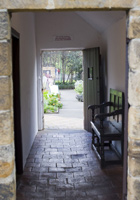
 The Entry
- The stone lintel above the door is carved with the initials J G C, the initials of Captain James Cook’s parents James and Grace. They built this house in 1755, the same year that Captain Cook turned 27 and joined the Royal Navy, already an experienced merchant seaman.
- The sandstone cottage walls are typical of the time, built using local materials.
- The front “door mat” of split flints meant that most mud could be scraped off before entering the house.
- The mounting stone on the right provided an easy and safe way for family or visitors to mount a horse.
As you enter the ‘through passage’:
- The oak settle suggests a convenient place to sit while putting on or removing outside boots.
- The pine bushel measure hanging on the wall indicates the quantity of ‘a bushel’, an old English standard measure of grain.
- The hanging garden tools are conveniently at hand, a reminder of the importance of the garden to the family food supply.
In the Kitchen and Dining area on the Ground Floor:
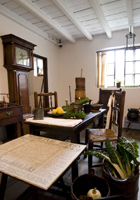 The cooking and serving utensils on display are all made of wood or metal.
- The four-pronged game hook of hand-wrought iron that hangs from the ceiling was used for hanging fresh meat.
- The centerpiece of the kitchen is an ingle fireplace, the only source of cooking, where a chimney crane supports revolving spits, trivets and the fire implements; a fork, bellows and tongs. The benches on either side made the “ingle nook” a cosy place to sit.
- The doors on the left lead to two small bedrooms where the oak stretcher beds can be seen to have ropes supporting straw mattresses. Note the high bedheads, in those days many people slept sitting up, believing this resulted in better health, better breathing and helped young people to grow taller.
Can you imagine?
This kitchen crowded with the family gathered for the evening meal; lit by candles and the glow of the fire; cooking pots steaming on their hooks; the table laid simply with plates and pewter drinking vessels.
Did you notice?
There was no enclosed oven or range, it is believed that Mrs Cook would have made her own bread dough and then taken it to the communal village bread oven about 100 metres away.
The family needed to be careful around the fire and with the use of candles, it is easy to see why so many homes of that time were destroyed by fires (you can see the large, dome-shaped brass ‘curfew cover’ used to cover the fire at night).
Water for the kitchen was probably carried in from a rain barrel just outside and that would often be refilled from the millrace at the bottom of the garden. The toilet would have been an outhouse that was probably shared with neighbouring families.
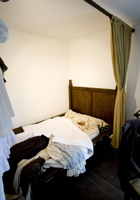 In the Main Room Upstairs:
- This room was both living room and main bedroom. Near the fireplace which warmed this level stands a brass warming pan; filled with hot coals it could be slid between the sheets to warm beds before ‘retiring’ for the night.
- The bed cover on the double bed probably dates from the 18th Century. It is hand made of white cotton patchwork and copies were made for the other beds in the house.
- The antique wool winder is wound with hand spun wool that has been dyed with leaves of the privet bush.
- The hooded oak cradle beside the parents’ bed dates from the early 18thC.
Can you imagine?
Having just three sets of clothes as was common at the time; one set of everyday clothes was usually being worn while the other set was washed and “Sunday Best” was kept for all special occasions. Mrs Cook, and the women who lived in this house after her time, spending the evening hours darning, spinning or knitting here beside the fireplace.
Did you know?
James and Grace Cook were the parents of eight children; Captain James was their second child, we know that three of his sisters and a brother all died before their fifth birthdays. Infant mortality was high, Captain Cook and his wife Elizabeth had six children, two infant sons and their only daughter all died before their fifth birthdays.
James Cook was born on 27 October, 1728 in the village of Marton. At that time his family lived in this two-roomed cottage with walls of mud and straw and a thatched roof, known in Yorkshire at that time as a ‘clay-biggin’. The family moved to Great Ayton when James was eight and James attended the Postgate School there for the next four years. Later again the family moved to this Cottage, here on the other side of the world almost 250 years later, in a country the Cooks did not know even existed when they were building in 1755.