
10 things you may not know about Melbourne
11 May 2016
We love to talk about food, coffee, shopping and the hidden gems of our city. But what about the lesser-known facts – the secrets embedded in Melbourne’s history, land and people?
Here are 10 facts that may come in handy at your next trivia night – you’re welcome.
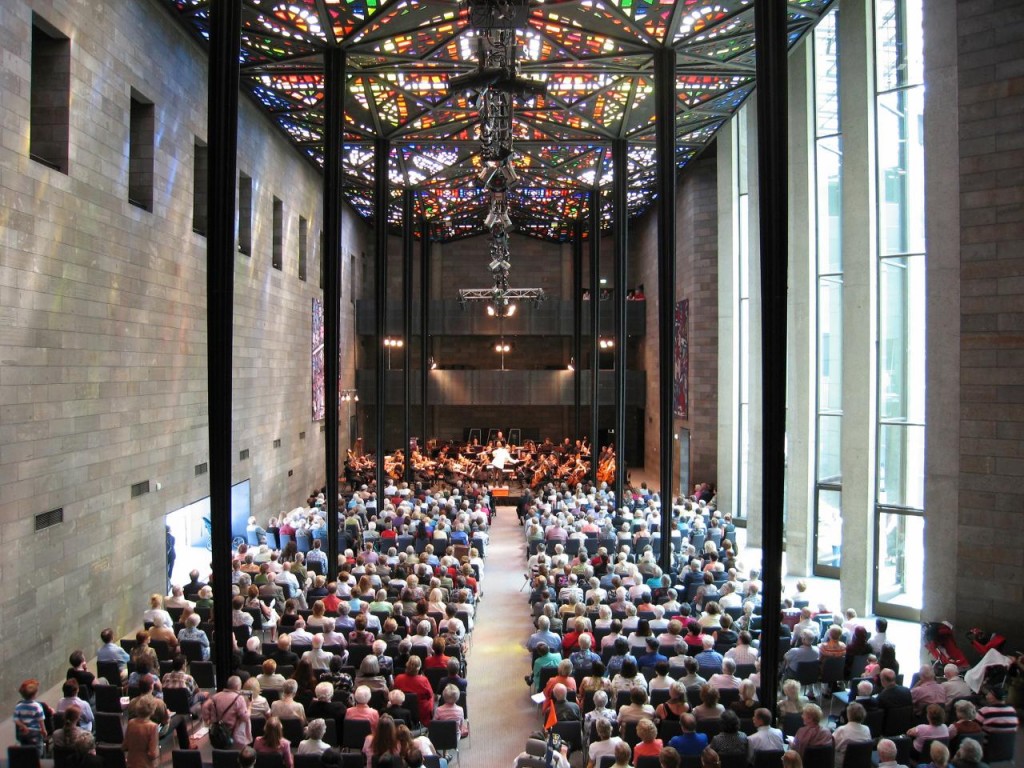
NGV’s stained glass ceiling
- A foodie’s paradise, Melbourne has more cafes and restaurants per capita than anywhere else in the world.
- Melbourne’s tram system is the largest in the world outside Europe, stretching more than 240 kilometres in total.
- A creek flows beneath Elizabeth Street. During a spectacular flood in 1972, the street was turned into a torrent of water rising to an estimated one-and-a-half metres. Nowadays when it rains, the ‘creek’ flows down a drain beneath the original creek bed along Elizabeth Street.
- Melbourne is home to Australia’s first pizza restaurant, Toto’s, founded in 1961 on Lygon Street, Carlton.
- The land on which the MCG sits was originally occupied by the Wurundjeri-willam people and historical documents describe large gatherings and corroborees in the area in the late 1830s and early 1840s.
- The Optus Centre at 367 Collins Street is home to a pair of peregrine falcons. During the breeding season, you can see a live feed of their nest and hatching young from inside the building’s foyer.
- Melbourne’s Chinatown was established during the Victorian Gold Rush in 1851 and remains the longest continuous Chinese settlement in the western world.
- The National Gallery of Victoria has the world’s largest stained glass ceiling, measuring 51 metres long by 15 metres wide. Located in the Gallery’s Great Hall, the ceiling was designed by artist Leonard French.
- Queen Victoria Market is the largest open-air market in the Southern Hemisphere. The market was also built on the site of the original Melbourne Cemetery. It’s no wonder there are a few ghost stories flying around.
- Melbourne is home to the first happy little Vegemite. The iconic spread was invented in 1922 by University of Melbourne science graduate, Cyril Callister, in a factory in South Melbourne.